
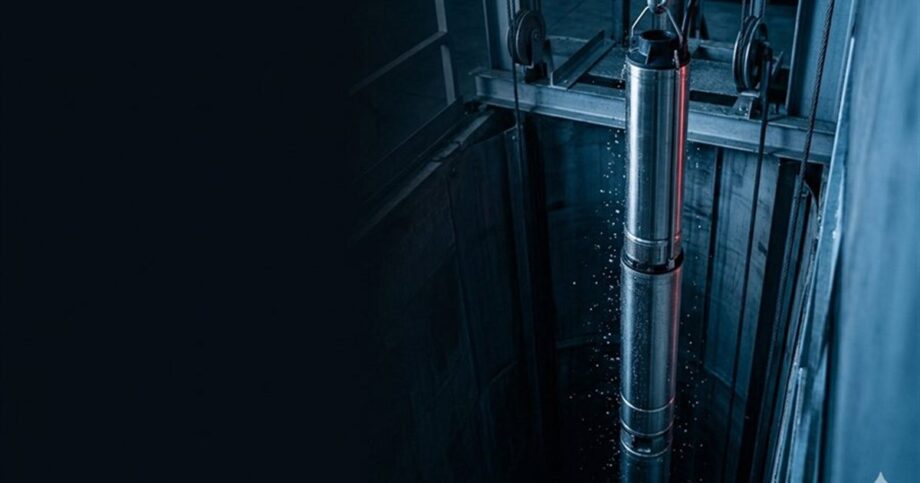
A borehole is one of the best investments you can make for a reliable water supply in Zambia — but it is only as good as the pump at the bottom of it. Choose the wrong unit and you face weak flow, burnt-out motors and repeat call-outs. Choose the right one and you get years of steady, efficient water. This guide walks you through the decisions that matter.
Start with your borehole, not the pump
Before you look at any product, get three figures from your borehole drilling or pump-test report:
- Total depth — how deep the hole is drilled.
- Static water level — how far down the water sits when nothing is pumping.
- Yield (recovery rate) — how many litres per hour the borehole can sustainably give. Pumping faster than the yield will run the hole dry and damage the pump.
If you don’t have these numbers, a pump test is worth doing first. Sizing a pump without them is guesswork.
The three numbers that size a pump
1. Head (the height the water must be lifted)
Head is measured in metres and is the single most important figure. It combines the depth the water is lifted from, the height of any tank above ground, and friction losses in the pipework. A tall building or a hilltop tank adds head — and head determines how powerful a pump you need.
2. Flow (how much water you need)
Flow is measured in litres per minute or cubic metres per hour. A single home needs far less than a guesthouse, farm or small commercial site. Crucially, your required flow must never exceed the borehole’s yield.
3. Power and voltage
Match the motor to your supply — single-phase for most homes, three-phase for larger or commercial installs. Oversizing the motor wastes energy and money; undersizing it leads to overheating.
Submersible or surface pump?
For most Zambian boreholes the answer is a submersible pump — it sits underwater, pushes rather than pulls, and handles deep lifts comfortably. Surface (jet) pumps suit shallow wells and tanks where the water is only a few metres down. As a rule of thumb, if the water level is more than about seven metres below ground, go submersible.
Don’t forget the cable, control box and pipe
A pump is part of a system. The right drop cable, a quality control box with dry-run and overload protection, and correctly sized rising main all protect your investment. Skimping here is the most common cause of premature pump failure.
Common mistakes to avoid
- Buying on price alone — a cheap, undersized pump costs more in the long run.
- Ignoring the borehole yield — the fastest way to burn out a new pump.
- No dry-run protection — if the water level drops, the pump must switch off automatically.
- Grey-market spares — non-genuine impellers and seals fail early and void warranties.
Let us size it for you
Send us your borehole depth, water level, yield and what the water is for, and we’ll recommend the right pump and genuine spares — sized properly the first time. Browse the full pump range or request a free quote and talk to a real person.